
This content is reviewed for medical accuracy, compliance with current guidelines and patient safety. expert supervision has been subjected.
Current scientific literature and national clinical guidelines and in-center practical knowledge.



Losing a tooth is not only an aesthetic problem; it is also a functional problem that can lead to chewing difficulties, shifting of neighboring teeth and loss of jawbone over time. Dental implant is one of the most frequently used methods of modern dentistry that offers the closest permanent solution to the root of the lost tooth. Many patients researching implant treatment in Sultanbeyli and the Anatolian Side are curious about how the process actually proceeds, to whom it can be applied and how long it takes.
This guide answers all the questions you may have, from the definition of a dental implant, to its stages, who it is suitable for and the healing process.
What is a Dental Implant?
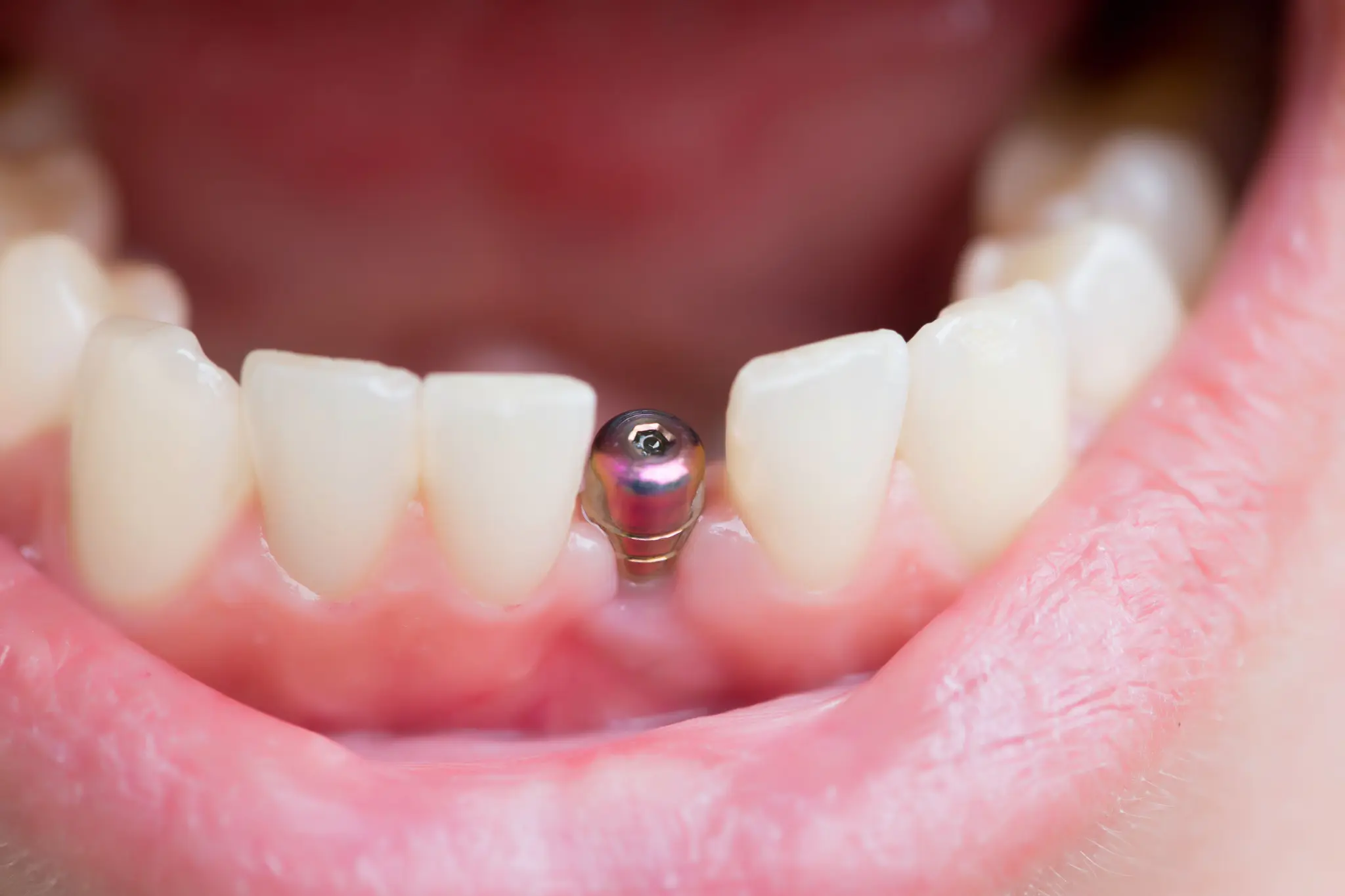
A dental implant is a biocompatible screw system, usually made of titanium or zirconium alloy, which is placed into the jawbone to replace the root of the lost tooth. This screw, which is also defined as an artificial root, creates a permanent foundation by biologically fusing with the jawbone (osseointegration); together with the crown placed on it, it gives the closest result to the natural tooth in terms of function and aesthetics.
Dental implant treatment is considered to be the longest-lasting and comfortable option among alternative methods (removable dentures, bridges) to eliminate toothlessness. With the right candidate selection, proper planning and regular follow-up, implants can continue to function for decades.
How Many Parts Does a Dental Implant Consist of?
The implant system consists of three basic components:
- Implant screw (fixture): A titanium or zirconium screw that is inserted into the jawbone and takes over the function of the natural tooth root.
- Abutment (fastener): The center piece that connects the implant screw and the superstructure; made of ceramic, zirconium or titanium.
- Crown (superstructure): A porcelain or zirconium tooth that appears in the mouth, providing the appearance of natural teeth.
Who Can Have Dental Implants?
Suitability for implant treatment is determined by evaluating multiple factors, including general health status, jawbone volume and oral hygiene.
General eligibility criteria for implants
- Individuals over 18 years of age with complete bone development
- Those with adequate jawbone density and volume
- Practicing or committed to good oral hygiene
- Non-smokers or those who agree to quit during treatment
- Those with chronic diseases such as diabetes can be implant candidates under controlled conditions
- Patients whose gum disease has been treated and stabilized
| ⚠ CAUTION - CONDITIONS THAT CANNOT BE IMPLANTED |
| Implant application may not be possible or may be postponed in the following cases: This list provides a general framework; the final decision is evaluated on a case-by-case basis. |
| - Uncontrolled diabetes or heart disease |
| - Individuals with incomplete bone development (usually under 18 years of age) |
| - Insufficient bone tissue (may not be suitable without grafting) |
| - Patients who have undergone radiotherapy to the head and neck region |
| - Bisphosphonate group drug users (osteoporosis treatment) |
| - Those with active gum disease (periodontitis) |
| - Pregnancy period |
In which cases is a dental implant recommended?
- Loss of a single tooth: Neighboring healthy teeth do not need to be cut for bridge construction.
- Loss of more than one tooth: Multiple implants can be applied without relying on neighboring teeth.
- Complete edentulism All-on-4 or All-on-6 methods offer a complete prosthetic solution on a small number of implants.
- Problems caused by removable dentures: Conversion of a wobbly, uncomfortable or mouth-sore-causing prosthesis to an implant-supported fixed prosthesis.
- When root canal treatment has failed or extraction is unavoidable. For information on root canal treatment What is Root Canal Treatment? You can check our article.
How Does the Pre-Implant Evaluation Process Work?
Before starting implant treatment, a comprehensive evaluation phase is necessary. This stage is critical for the success of the treatment.
- Clinical examination: The dentist examines the gums, remaining teeth and oral tissues in general.
- Radiologic imaging: Panoramic X-ray and computed tomography (KIBT/CBCT) are used to evaluate the volume, density and anatomical structure of the jawbone in three dimensions. Sana Medical Center Radiology Unit, performs these evaluations accurately with its digital imaging infrastructure.
- General health assessment: Diabetes, cardiovascular disease, diseases affecting bone metabolism or medication use are questioned. If necessary Internal Medicine Unit coordination is ensured.
- Treatment planning: Bone volume, number of implants, need for temporary prosthesis and total duration are determined and shared with the patient.
| 💡 EXPERT NOTE - FROM THE ORAL AND DENTAL HEALTH UNIT |
| A situation we frequently encounter in our outpatient clinic: Patients who say “I was told that there is no bone in another clinic, I cannot get an implant”. However, in most cases with insufficient bone volume, a suitable ground can be prepared for the implant with bone grafting (bone augmentation). Tomographic imaging is essential for this decision; panoramic X-rays alone may not be sufficient. |
How is a Dental Implant Made? Step by Step Process
Implant treatment is a multi-stage process that can last from a few months to about a year, depending on the patient's bone condition and general health.
1. Preparation: Gum and Bone Health
Gum disease (periodontitis), if present, is treated first. Gum health, is the basic condition for the long-term success of the implant. If the bone volume is insufficient, bone grafting (bone augmentation/autograft/allograft) is planned and the implant phase is started after the healing period.
2. Implant Placement Surgery
The procedure is performed under local anesthesia; no pain from the surgery is felt. The gum is opened and a screw socket is prepared with special drills and the titanium/zirconium implant is inserted into the bone. The gum is then sutured closed or the healing cap is left in place. If necessary, a temporary prosthesis is applied.
3. Osseointegration Period
Osseointegration is the process of biological fusion of the implant screw with bone cells. This process can take approximately 2-3 months for the lower jaw and 3-6 months for the upper jaw. The reason why it takes longer in the upper jaw is the relatively lower bone density. During this period, the load on the implant area is kept under control.
4. Abutment Placement
After the osseointegration is completed, the gingiva is opened and the fastener called abutment is fixed on the implant. This small procedure is also performed under local anesthesia and the gum is allowed to take its final shape for a few weeks.
5. Permanent Crown (Superstructure) Application
The porcelain or zirconium crown, which is produced by taking precise measurements, is fixed on the abutment. At this stage, color matching, tooth shape and bite balance are checked in detail. In cases with aesthetic priority in the anterior region, the combination of zirconium abutment and zirconium crown is preferred in terms of natural appearance.
| 📅 MAKE AN APPOINTMENT |
| Sana Medical Center for an evaluation about implant treatment Oral and Dental Health Unit‘for more information. Online appointment system You can make your appointment by choosing the appropriate time. |
Titanium or Zirconium? Which to Prefer?
This is one of the most frequently asked questions when choosing an implant. Both materials have different advantages.
| Feature | Titanium Implant | Zirconium Implant |
| Duration of use | 50+ years of clinical data | Relatively new, ~20 years of data |
| Success rate | -98 (long-term) | -97 (short- to medium-term) |
| Metal content | Yes (titanium alloy) | None (full ceramic) |
| Allergy risk | Very low | None (preferred for metal allergy) |
| Aesthetics | Risk of gray reflection in the frontal zone | White color, superior in fine gingiva |
| Cost | Relatively more accessible | Higher |
| In one piece? | Usually two pieces | Mostly one piece |
| Recommended region | Each region | Anterior region, thin gingival cases |
The choice between the two materials is made by the physician, taking into account the thickness of the gingiva, aesthetic expectations, presence of metal allergy and bone condition. Both implant types have high success rates in the right indication and application.
What to Expect After Implant?
Normal Symptoms After the Procedure
- Swelling and mild pain that may last 2-3 days after insertion
- Mild bruising in the procedure area (especially in bone grafting)
- Tenderness until the wound heals
Things to Consider During the Recovery Process
- Smoking: Significantly adversely affects the success of osseointegration; cessation during treatment is recommended.
- Temporary dietary restrictions: In the first few days, hard foods and foods that require biting force should be avoided.
- Oral hygiene: Careful maintenance with a toothbrush, an interdental brush and, if necessary, antiseptic mouthwash is essential.
- Check-up appointments: Check-ups should be made at intervals determined by the physician.
Situations in which a physician should be consulted
- Severe or increasing pain (exceeding 3 days)
- Significant swelling or fever
- Shaking or movement of the implant screw
- Symptoms of inflammation of the gums
| 💡 EXPERT NOTE - FROM THE ORAL AND DENTAL HEALTH UNIT |
| The leading causes of implant failures include smoking, poor oral hygiene and uncontrolled diabetes. When these three factors are under control, implant success rates increase significantly. Regular check-ups at least twice a year after the implant ensures that problems that may occur in the early period are recognized before they grow. |
What is the Success Rate of Dental Implants?
According to the international dental literature, the 10-year success rate for titanium implants placed under appropriate indications exceeds 95%. This rate varies depending on patient selection, surgical technique, implant brand, and post-operative care.
Bone loss around the implant (periimplantitis) is the most common cause of failure. This risk can be significantly reduced with regular dental check-ups and proper oral hygiene.
Implant, Bridge or Removable Prosthesis?
There are three main options for treating tooth loss. Understanding the differences between these options can help you make the right choice.
| Criteria | Implant | Bridge Tooth | Removable Prosthesis |
| Impact on neighboring teeth | No | Healthy teeth are cut | Printing occurs with folders |
| Bone loss | Prevent | Unavoidable | Unavoidable |
| Lifetime | 15-30+ years | 10-15 years | 5-7 years |
| Comfort | Like natural teeth | Good. | Variable |
| Care | Normal brushing | Interface cleaning | Daily removal/cleaning |
| Implementation time | 3-6 months (with bone) | 2-4 weeks | 2-4 weeks |
| Cost (initial) | High | Middle | Low |
Which option is appropriate is determined by the location of the edentulousness, the health of the adjacent teeth, the bone condition and the overall health profile of the patient. This decision should be made by the physician after clinical examination and radiologic evaluation.
Don't Postpone Tooth Loss: Early Implant, Less Bone Loss
Each month that passes after tooth loss starts a process of increasing bone loss in the jawbone. This bone loss can make future implant placement more complex and costly. Early evaluation is of great importance to preserve the existing bone tissue.
It is true that implant treatment requires a long-term process, but once completed, it offers a permanent solution that will function for years. With regular oral hygiene and annual check-ups, implants can be used for decades without any problems.
Even if you have no complaints, if you have lost a tooth, it is recommended that you see a dentist as soon as possible to evaluate treatment options.
Sana Medical Center for Dental Implants in Sultanbeyli
Sana Medical Center Oral and Dental Health Unit; We offer a wide range of implant treatments from single missing teeth to cases of complete edentulism. With digital imaging infrastructure and up-to-date implant systems, an individual treatment plan is prepared for each patient.
Where general health may affect implant suitability Internal Medicine and Radiology evaluation can be made in coordination with the units. With its central location in Sultanbeyli, our center is easily accessible from Pendik, Ümraniye, Kartal and Tuzla and is contracted with many private health insurance companies.
If you are experiencing tooth loss or want to get information about implant treatment, online appointment system you can select your available time slot or call our center.
| 📅 MAKE AN APPOINTMENT |
| You can contact Sana Medical Center for your questions about dental implants or your oral and dental health. Online appointment system you can easily make an appointment. We have agreements with many private health insurances. |
Frequently Asked Questions
Is dental implant surgery painful?
No; since the procedure is performed under local anesthesia, no pain is felt during the operation. Pressure or vibration sensation should be considered normal. Mild swelling and pain that may last 2-3 days after the procedure is an expected healing reaction; it can be managed with painkillers recommended by the physician.
How many months does it take to complete implant treatment?
If no bone grafting is required, the process is usually finalized within 3-6 months: implant placement, osseointegration period and crown application. In cases where bone grafting is required, this can take up to 9-12 months. Your doctor will discuss your individual treatment schedule with you after the examination.
Does the implant last a lifetime?
With proper care and regular check-ups, the implant screws can continue to function for 20-30 years and longer. The overlying crown may need to be replaced in 10-15 years. Implant success is directly affected by oral hygiene, smoking and general health.
Can everyone get dental implants?
No; implant suitability depends on bone volume, general health and oral hygiene. In case of insufficient bone tissue, the ground can be prepared with a graft procedure. In cases such as uncontrolled diabetes, active gum disease or the use of bisphosphonates, treatment can be postponed or a different plan can be created. The final decision is made after examination and imaging.
Is the implant covered by insurance?
Some of the private health insurances in Turkey cover dental implant treatment; however, there are significant differences from policy to policy. Sana Medical Center is contracted with many private insurance companies. To find out your insurance coverage you can contact us.
Can I be allergic to titanium implants?
True allergy to titanium is extremely rare; however, zirconium implants may be preferred in patients with metal sensitivity. If you think you have a metal allergy, it is sufficient to tell your doctor during the examination; the appropriate implant material will be determined together.
What should I do before getting an implant?
The first step is to have an examination with a dentist and radiological imaging (panoramic x-ray or CBCT tomography). This evaluation will allow an appropriate treatment plan to be created, taking into account your bone volume, gum health and general health. Do not forget to share your current medication use and chronic diseases with your doctor.
This content, Sana Medical Center specialist physician staff in line with current medical literature and clinical experience. It is intended for general information purposes only and does not constitute medical advice. For individual assessment appointment with our specialist physicians is recommended.