
This content is reviewed for medical accuracy, compliance with current guidelines and patient safety. expert supervision has been subjected.
Current scientific literature and national clinical guidelines and in-center practical knowledge.



Most people who leave an eye exam hearing the phrase “you’re starting to develop cataracts” go home with the same two questions: How serious is this, and what should I do? The phrase itself is alarming, because cataracts are still commonly associated with vision loss—and even blindness—among the general public.
In fact, a cataract is the loss of transparency in the eye’s natural lens over time, and in many people, it progresses slowly over the years. For some patients, regular follow-up alone is sufficient for a long time after diagnosis. In other patients, however, vision deteriorates to the point where it interferes with daily life, and treatment is planned. It is not a matter of choice, but rather a question of timing.
This article explains what a cataract is, what symptoms it presents, which conditions it is often confused with, and how it is diagnosed during an eye exam.
Straight Answer: A cataract is the clouding of the natural lens behind the pupil as it loses its transparency, and the most common cause is aging. Blurred vision, faded colors, impaired night vision, and sensitivity to light are typical symptoms. It cannot be reversed with medication or eye drops. The diagnosis is made through a detailed examination by an ophthalmologist; the decision regarding treatment is based on the individual’s visual needs.
What is a cataract?
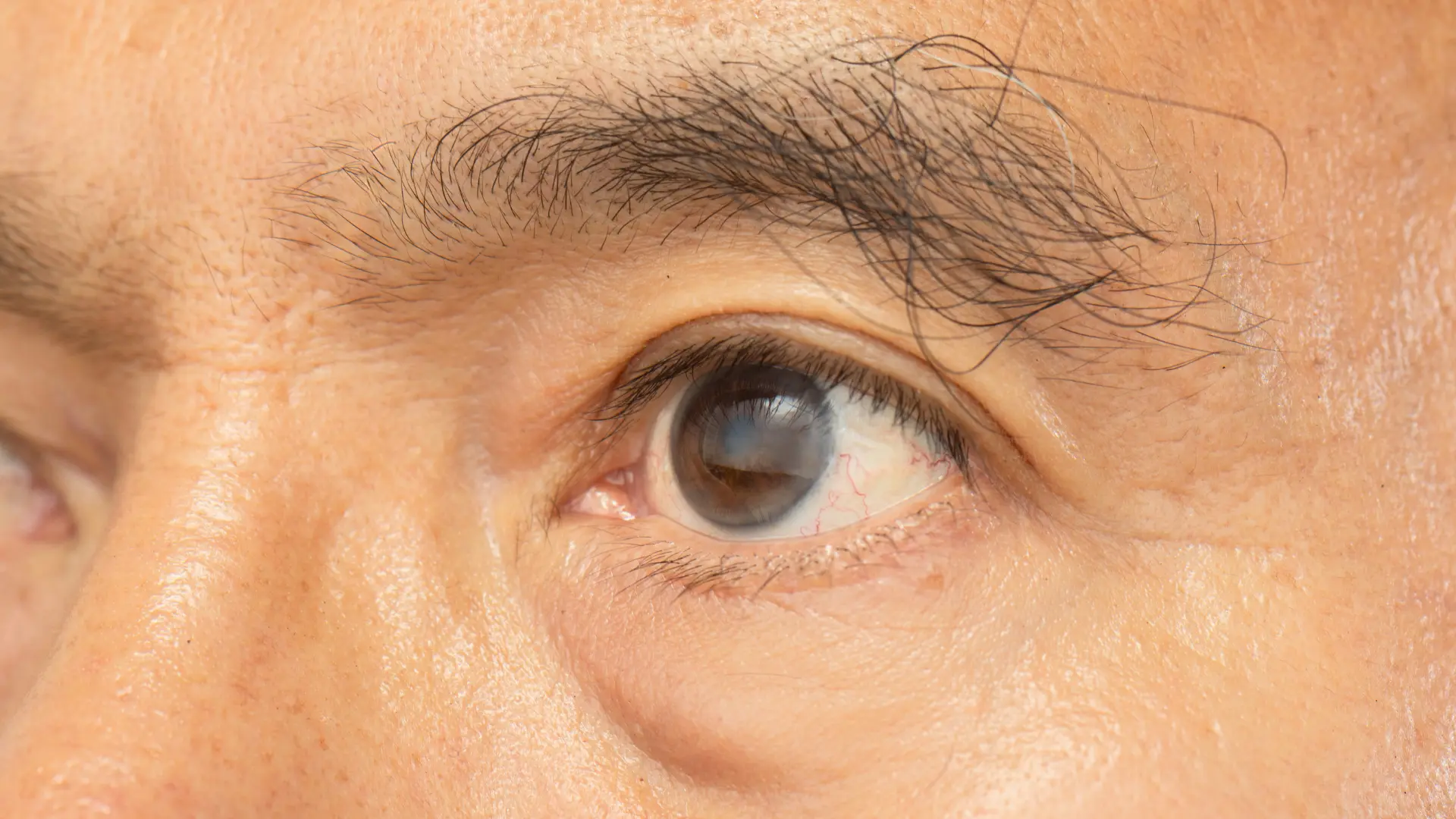
A cataract is the loss of transparency in the natural lens located just behind the pupil. When this lens is healthy, it is as clear as glass and focuses incoming light onto the retina. As the structure of the proteins that make up the lens breaks down and clumps together over time, its transparency decreases, light cannot pass through properly, and vision becomes blurry.
A defining characteristic of the process is that it progresses slowly in most people. Because the clouding of the lens increases over the years, the person does not notice the change day by day; many patients only realize how much their vision has deteriorated when they are able to make a comparison. When they close one eye and look with the other, or try on an old pair of glasses, the difference suddenly becomes apparent. For this reason, patients are almost never able to pinpoint the exact date when their symptoms began.
A cataract is not a tumor, a membrane, or tissue growing on the eye. The fact that it is commonly referred to as “a veil over the eyes” fuels this misunderstanding.
What is the function of the eye's lens?
The natural lens performs two functions: it focuses light onto the retina and adjusts the focus by changing its shape when looking at nearby objects. After age 40, this ability to change shape decreases, and the need for reading glasses begins. With cataracts, however, the problem is not focusing but transparency; the lens has difficulty letting light through. This distinction is important because it explains why treatment involves replacing the lens rather than using medication.
What are the symptoms of cataracts?
The most common symptom of cataracts is painless, gradually worsening blurred vision. Vision loses its clarity, as if looking through a fogged-up window; this blurriness cannot be corrected by rubbing the eyes or changing the prescription of one’s glasses.
Blurred vision is often accompanied by changes in color perception. Colors appear faded, whites look slightly yellowish, and it becomes particularly difficult to distinguish shades of blue. Because the change occurs very gradually, the person hardly notices it on their own.
Complaints related to light constitute a separate category and are the issue that most significantly impairs daily life. Vision may be noticeably reduced in sunny weather; oncoming headlight glare can scatter and cause dazzling; halos may appear around light sources; and difficulty driving at night is one of the most common initial complaints reported by people with cataracts.
A less well-known symptom is double or blurred vision when looking with one eye. When clouding in the lens is irregularly distributed, light is refracted at different angles, and a double image may appear in one eye. This finding must be distinguished from double vision that occurs when looking with both eyes. The second type involves the eye muscles and the nervous system, requires a different evaluation, and may be urgent.
The first changes noticed in the early stages
Early-stage cataracts are often asymptomatic. The first thing people usually notice isn’t a loss of visual acuity but a loss of comfort: needing more light while reading, experiencing eye strain more quickly in the evening, and a noticeable decrease in clarity during twilight. People often consider this a normal part of aging and don’t mention it.
During this period, cloudiness is rarely what prompts a person to see a doctor. Cataracts are most often detected during a driver’s license renewal exam, a routine eye exam, or annual physical It is detected incidentally during the procedure.
A common misconception: frequent changes in eyeglass prescription
As a cataract develops, the refractive power of the lens may change, leading to a shift in the prescription. The person notices that they have to replace their glasses every six months.
This shift has a confusing consequence. In some people who have worn reading glasses for many years, when the refractive error shifts toward myopia, near vision improves temporarily, and the person is able to read without glasses. Patients may mistake this for a positive development, but it is often a sign that the change in the lens is progressing.
Frequent changes in eyeglass prescriptions, occurring at short intervals, are, in and of themselves, sufficient grounds for an eye exam. Understanding why your prescription has changed is more important than getting new glasses. Otherwise, the underlying cause will be overlooked, and only the symptom will be corrected.
Common Mistakes
It is a common belief that one should “wait for the cataract to mature,” a notion that stems from older surgical methods. In the current approach, the criterion for deciding whether to wait is not the hardness of the lens, but the extent to which the person’s vision impairs their daily life. An excessively hardened lens does not make surgery easier; it makes it more difficult.
Situations That Require Seeking Medical Attention Without Delay
A cataract is a slowly progressing and painless condition. The following symptoms are not part of the typical course of a cataract and should be evaluated without delay, as they may indicate another eye problem:
- If your vision has suddenly deteriorated over the course of a few hours or a few days
- If you have eye pain, noticeable redness, or a headache accompanied by nausea and vomiting
- If a patient describes a curtain-like obstruction or a dark spot in part of their visual field
- If you experience sudden flashes of light or a sudden increase in the number of floaters in your eye,
- If double vision begins when looking with both eyes
- If you experience changes in your vision after an eye injury
- If a person with diabetes experiences a sudden, significant decline in vision
None of these symptoms are to be expected as part of the natural progression of cataracts. Since eye conditions requiring urgent evaluation can begin painlessly and insidiously, the appropriate course of action in case of suspicion is to see an ophthalmologist the same day.
What are the types of cataracts?
A cataract is not a single condition. Different types are identified based on where the clouding of the lens begins, and each type produces a different pattern of symptoms. More than one type may coexist in the same person.
This distinction is highly practical. It provides insight into what a person complains about most and which type has developed.
This is exactly what the doctor looks for during an examination. The location of the opacity within the lens determines both the nature of the symptoms and the rate of progression. The fact that certain types appear at an earlier age and for specific reasons requires an investigation into an underlying condition. For this reason, the diagnosis encompasses not only the presence of a cataract but also its type.
Nuclear cataract
It begins at the center of the lens and is the most common type of age-related cataract. It progresses slowly; the center takes on a yellowish hue over time, and distance vision is affected first. Because of this slow progression, the diagnosis is often made during a routine eye exam.
A shift in refractive error toward myopia is most commonly seen in this type. A temporary improvement in near vision is usually a sign of a nuclear cataract, and this is often the finding that patients misinterpret.
Cortical cataract
It is characterized by linear blurring that extends from the edge of the lens toward the center. Because this condition scatters light, the most noticeable symptom is glare; the person is particularly bothered by headlights at night and by glare on sunny days.
Posterior subcapsular cataract
Because it develops on the back surface of the lens, directly on the line where light is focused, it causes nearsightedness to progress much more rapidly than other types. Even a slight clouding can significantly impair vision.
The pattern of symptoms is also different. Vision is more affected in bright light and when working at close range. The person may have difficulty seeing in sunny weather or while reading, but may be relatively comfortable in dim lighting.
This type may develop at a younger age than others and is particularly associated with diabetes and long-term corticosteroid use. When diagnosed in individuals under the age of 50, the underlying cause must be investigated, as this investigation is not limited to an eye exam alone.
What causes cataracts?
There is no single cause of cataracts. Any factor that disrupts the structure of the proteins that make up the lens can contribute to a loss of transparency over the long term; some of these factors are unavoidable, while others are modifiable.
Aging tops the list and is by far the most common cause of cataracts. After age 60, changes in the lens are so common that a certain degree of clouding is almost to be expected. This does not mean that everyone will need surgery; the presence of clouding and clouding severe enough to impair vision are two different things.
Factors other than age can lead to the earlier onset of cataracts.
Age-related cataracts
Age-related cataracts develop as a result of damage to the lens proteins that accumulates over the years, causing a change in their structure. They usually affect both eyes, but the condition does not progress at the same rate in both eyes; as a result, patients often describe having significantly worse vision in one eye than the other.
The Relationship Between Diabetes and Cataracts
Diabetes is the most significant systemic cause that can lead to both the earlier onset and faster progression of cataracts. Prolonged high blood sugar levels disrupt the biochemical balance within the lens.
People with diabetes may also experience temporary blurred vision due to fluctuations in blood sugar levels. When blood sugar rises, the water content of the lens changes, causing a shift in refractive power; vision may deteriorate noticeably within a few days and then return to normal. This condition is often mistaken for cataracts, but it is reversible and resolves once blood sugar levels are stabilized.
The effects of diabetes on the eye are not limited to the lens. Because diabetic retinopathy—which affects the blood vessels in the retina—can progress without any symptoms in its early stages, Type 2 diabetes For individuals who have received a diagnosis, regular fundus examinations constitute a separate aspect of follow-up. This follow-up, internal medicine and requires that eye disease evaluations be conducted concurrently. The absence of any perceived impairment in vision does not mean that the retina is unaffected.
Medications, trauma, and congenital causes
Long-term use of corticosteroids is a known drug-induced cause of cataracts and can occur with both oral and eye drop forms of the medication. This does not mean the medication is unnecessary. The decision regarding treatment and its duration is at the discretion of the treating physician. However, it is advisable to schedule eye examinations for individuals who use corticosteroids for an extended period.
Blunt or penetrating blows to the eye can result in traumatic cataracts, and this condition may develop even years after the injury.
Congenital cataracts, on the other hand, occur in infants, and early detection is critical due to the risk of amblyopia. The neonatal and infant periods child health This is why eye examinations are routinely included in these checkups. If a whitish reflection is noticed in an infant’s pupil, it is a finding that must be evaluated without delay.
Is it a cataract, or another eye condition?
Blurred vision is the most common symptom of cataracts, but it is not exclusive to cataracts. Patients presenting with the same complaint may have very different conditions, and the distinction can only be made through an examination. There is a very practical reason why this distinction is so important: while waiting is often harmless in the case of cataracts, in some conditions, lost time cannot be regained.
Eyes pressure, or glaucoma, is the condition most commonly confused with cataracts. The reason for this confusion is that both conditions progress painlessly and are common in older adults. However, their courses are fundamentally different: while a cataract blurs central vision, the most common type of glaucoma first silently narrows peripheral vision, and the person usually notices this much too late. Vision lost due to a cataract can be restored by replacing the lens; however, the visual field lost due to glaucoma cannot be recovered. Both conditions can coexist in the same person, so the presence of one does not rule out the other. Symptoms and Monitoring of Intraocular Pressure For this reason, it is treated as a separate heading.
Macular degeneration is the second most common condition with which it is mistaken, and the distinguishing feature is the nature of the blurriness. In cataracts, the entire visual field becomes cloudy; in macular degeneration, however, a spot or distortion in the center is described, straight lines may appear wavy, and the center of letters may disappear while reading. The person has difficulty recognizing faces, but peripheral vision is preserved.
Emergencies involving the retina constitute a completely separate category and are time-sensitive. Sudden flashes of light, floating objects that suddenly multiply in front of the eyes, and a sensation of a curtain across the visual field are warning signs of this category.
Dry eye, on the other hand, is the most commonly overlooked and easily misdiagnosed condition. Fluctuating blurred vision throughout the day, increased discomfort when looking at screens, and vision that temporarily improves with blinking are all signs of dry eye. The blurriness caused by a cataract, on the other hand, does not change significantly throughout the day and does not improve with blinking. This distinction is highly valuable in practice, because dry eye is a much simpler condition, and when correctly diagnosed, it eliminates unnecessary anxiety.
How is a cataract diagnosed? What happens during the exam?
The diagnosis of cataracts is a process that begins with the patient’s description of their symptoms and is completed by a detailed examination performed by an ophthalmologist. It is not a diagnosis made through blood tests or imaging; the lens must be viewed directly.
The examination typically begins with a detailed discussion of the patient’s symptoms. The patient is asked when the blurred vision began, under what circumstances it worsens, how their night vision is, and whether their eyeglass prescription has changed recently. Systemic conditions such as diabetes and high blood pressure, medications being taken, previous eye surgeries, and any eye injuries are also discussed. This questioning is not merely a formality; it plays a major role in determining the type of cataract and its possible cause.
Next, visual acuity is measured and the front of the eye is examined.
The final part of the examination focuses on the back of the eye and is the most critical part of the diagnosis. The goal is not merely to detect a cataract, but to determine whether there is another cause impairing vision. A severely clouded lens can make evaluating the posterior segment difficult, and in such cases, additional methods may be required.
Visual Acuity and Slit-Lamp Examination
Visual acuity is measured separately for each eye using a standard chart, and the value corrected with eyeglass lenses is also recorded when necessary. This measurement alone is indicative, as the value measured does not always correspond to the difficulty described by the individual.
The lens is examined directly using a special microscope called a slit lamp. The location, severity, and type of clouding are determined during this examination. The procedure is painless and takes just a few minutes.
Fundus and Intraocular Pressure Assessment
Eye drops that dilate the pupil are typically used for a fundus examination. Since the effects of the drops last for several hours, reading up close becomes difficult and sensitivity to light increases after this examination. For this reason, it is recommended that you not drive to your appointment.
Measuring intraocular pressure is necessary to rule out glaucoma and is routinely performed in every patient with cataracts. Since both conditions can coexist in the same person, the presence of cataracts alone does not rule out the other condition.
For people with diabetes, a fundus examination also involves an evaluation of the retina and is repeated at regular intervals, regardless of whether cataracts are present. Both evaluations can be performed during the same visit, but the follow-up intervals are set differently. Understanding this distinction prevents patients from skipping their retinal follow-up by thinking, “I’ve already had my eyes checked.”.
Questions to Ask Your Doctor
When you’re diagnosed with cataracts, asking these questions during your exam will make things easier for you:
- What type of cataract do I have, and in which eye is it more advanced?
- Is the entire loss of my vision caused by cataracts, or is there another reason?
- When should I come in for my next checkup?
- Is there any medication I'm taking that could affect my contact lenses?
What happens as a cataract progresses?
If left untreated, a cataract continues to progress and the lens hardens over time. Vision gradually deteriorates; in advanced stages, a person may be able to perceive light but may no longer be able to make out shapes.
The rate of progression varies significantly from person to person. In some patients, the clouding remains at the same level for years and does not significantly affect vision; in others, however—especially if they have a comorbid condition such as diabetes—the process progresses more rapidly. This variability is why the follow-up interval is determined individually for each patient.
There are also additional problems that advanced cataracts can cause on their own. As the lens becomes excessively hardened and swollen, it can affect the circulation of intraocular fluid, leading to increased pressure; the eye may become painful; and surgery performed at an advanced stage becomes technically more challenging.
How often should someone with cataracts go for a checkup?
Once a cataract has been diagnosed, there is no single follow-up interval that applies to everyone. The interval is determined based on the degree of clouding in the lens and the individual’s visual needs.
There are four key factors. First is the type of clouding and how far it has progressed; since cataracts developing on the back surface cause nearsightedness more rapidly, they may require more frequent monitoring. Second is whether there has been a measurable change in vision since the last examination. Third is whether there is a concomitant condition, such as diabetes, glaucoma, or long-term corticosteroid use. Fourth is how much the person relies on their vision in daily life; someone who drives at night is not monitored at the same intervals as someone who spends most of their time at home.
There are also situations that require seeking medical attention without waiting for the next scheduled appointment. These include a sudden, significant decline in vision, the onset of eye pain, or the appearance of any of the symptoms listed in the “red flag” section.
The purpose of the examination is not merely to assess how far the cataract has progressed. Intraocular pressure and the fundus are also evaluated at every examination, because the presence of a cataract does not provide protection against other eye diseases. Only through this regular monitoring can it be determined how much of the vision loss is due to the cataract and how much is due to another cause.
Is there a treatment for cataracts?
The only known treatment for cataracts is surgery. The natural lens, which has lost its transparency, is removed and replaced with an intraocular lens.
There is no method—whether involving medication, eye drops, glasses, or exercise—that can restore the lens’s transparency. This does not mean, however, that everyone with a cataract needs to undergo surgery immediately. The availability of treatment and the timing of treatment are two separate issues.
In the early stages, if vision does not interfere with daily life, regular follow-up may be sufficient. The key factor in making this decision is not the degree of clouding in the lens, but rather the extent to which it affects the person’s quality of life. Difficulty with activities such as driving, reading, going up and down stairs, and recognizing faces are concrete criteria for this assessment. The same level of vision may not pose a problem for one person, but for another, it may represent a serious limitation.
The decision to undergo surgery and the timing of the procedure are individualized; they are determined by the ophthalmologist’s evaluation of the examination findings in conjunction with the patient’s daily living needs. The circumstances under which it is reasonable to wait and those in which postponing the procedure is risky merit a separate discussion of their own.
Will it work with eye drops or glasses?
No. Glasses can provide temporary relief by correcting the refractive error in the early stages of cataracts, but they do not restore the lens’s transparency. As the clouding progresses, the correction provided by glasses also decreases.
There is no established medical evidence for eye drops, herbal mixtures, or supplements claimed to prevent or slow the progression of cataracts. The main risk of turning to these products is not a waste of time, but the failure to identify another cause of vision loss.
Can cataracts be prevented?
There is no known method that completely prevents age-related cataracts. However, some factors that accelerate their development can be modified.
Prolonged unprotected exposure to the sun’s ultraviolet rays is one of the leading risk factors, and wearing sunglasses with UV filters is a reasonable method of protection. Quitting smoking and keeping blood sugar and blood pressure under control also indirectly support lens health. None of these measures offer a guarantee.
The most effective approach is regular eye exams. After age 40, unless there is an underlying medical condition or symptoms, eye exams conducted at regular intervals enable the early detection of both cataracts and other eye diseases that progress silently; for people with diabetes, the frequency of these exams is determined on a case-by-case basis.
Frequently Asked Questions
Do cataracts occur in both eyes at the same time?
Age-related cataracts usually develop in both eyes, but they do not progress at the same rate in both eyes. For this reason, people often first notice blurred vision in one eye. Cataracts caused by trauma or a previous eye condition, however, may occur in only one eye.
Can cataracts recur?
Cataracts do not recur in the removed natural lens. However, in some people, the thin membrane behind the lens may become cloudy over time, and vision may become blurry again. This condition is commonly referred to as a “recurrence of cataracts,” but it is actually a different condition and can be treated with a laser procedure performed in an outpatient setting.
At what age do cataracts begin?
Age-related cataracts most commonly occur in people aged 60 and older, but it is not unusual for them to be diagnosed as early as age 50. They can develop at much younger ages in the presence of diabetes, long-term corticosteroid use, or eye trauma.
Does using computers and phones cause cataracts?
There is no evidence that screen use causes cataracts. Prolonged screen use can lead to symptoms of dry eyes and eye strain; since these symptoms can be mistaken for the cloudiness associated with cataracts, it is advisable to have them evaluated.
Can someone with cataracts drive?
This depends on visual acuity and, in particular, night vision. Difficulty driving at night due to glare is one of the earliest signs that cataracts are beginning to affect daily life and is a sufficient reason to schedule an eye exam.
What should I bring with me when I go for an eye exam?
A list of the medications you are taking, your current eyeglasses, records of any previous eye exams (if available), and up-to-date test results for chronic conditions such as diabetes will help make the exam go more smoothly. Since dilating eye drops may be used, we recommend that you do not drive to your appointment.
What Determines the Right Timing for Cataract Surgery?
A cataract is not a condition that requires an immediate decision upon diagnosis. For most people, it is a process that unfolds over the course of several years, and the point at which intervention is necessary varies from person to person; the diagnosis is not an endpoint, but rather the beginning of ongoing monitoring.
There are three key factors: the extent to which vision impairs daily life, the progression of clouding in the lens, and whether there is any other accompanying eye condition. These three factors can only be monitored through regular eye exams. For a person experiencing blurred vision, the first step is not to choose a treatment, but to correctly identify the cause of the vision impairment.
Ophthalmology at Sana Medical Center
The Ophthalmology Unit offers comprehensive eye examinations, visual acuity testing, intraocular pressure assessments, and fundus examinations for patients with complaints of blurred vision and reduced vision. It also provides eye monitoring for individuals with chronic conditions such as diabetes, internal medicine and nutrition and dietetics can be planned along with its units. For the scope of the unit, Eye Diseases You can view the page and check the days and hours of operation Contact You can access it from the page.
This content, Sana Medical Center specialist physician staff in line with current medical literature and clinical experience. It is intended for general information purposes only and does not constitute medical advice. For individual assessment appointment with our specialist physicians is recommended.